Design Insights
Case Study: Napa Valley Wine Country Kitchen
A complete case study of a Napa Valley wine country kitchen designed around culinary entertaining, wine integration, and indoor-outdoor living.
How We Designed a Culinary Hub for a Napa Valley Estate
A Kitchen Built for Wine Country Living
The clients -- a retired couple who had spent decades in San Francisco before building their dream home on a five-acre vineyard property in the Stags Leap District of Napa Valley -- came to us with a vision shaped by years of visiting the world's great wine regions. They wanted a kitchen that honored the agricultural landscape around them, supported serious home cooking with seasonal produce from their garden, integrated wine storage and service into the daily rhythm of the home, and opened completely to the outdoor entertaining spaces overlooking their Cabernet Sauvignon vines.
This was a new-construction project, which gave us the rare luxury of designing the kitchen from the ground up in collaboration with the project architect. Every decision -- from structural beam placement to window orientation to plumbing infrastructure -- was made with the kitchen's function and aesthetic in mind. The total kitchen investment was $340,000, encompassing 520 square feet of primary kitchen space plus an adjacent 90-square-foot butler's pantry and a connected outdoor cooking station.
The project took 11 months from initial design through completion, with our team deeply involved at every stage. Here is the story of how this kitchen came together.
Design Inspiration: The Wine Country Vernacular
Napa Valley has developed its own architectural language -- a blend of agricultural pragmatism, California ranch tradition, and European wine estate influence. The best Napa homes feel grounded in the landscape, using materials that echo the earth, the vineyards, and the stone walls that line the valley's historic properties. We drew heavily on this vernacular, creating a kitchen that feels like it grew from the land.
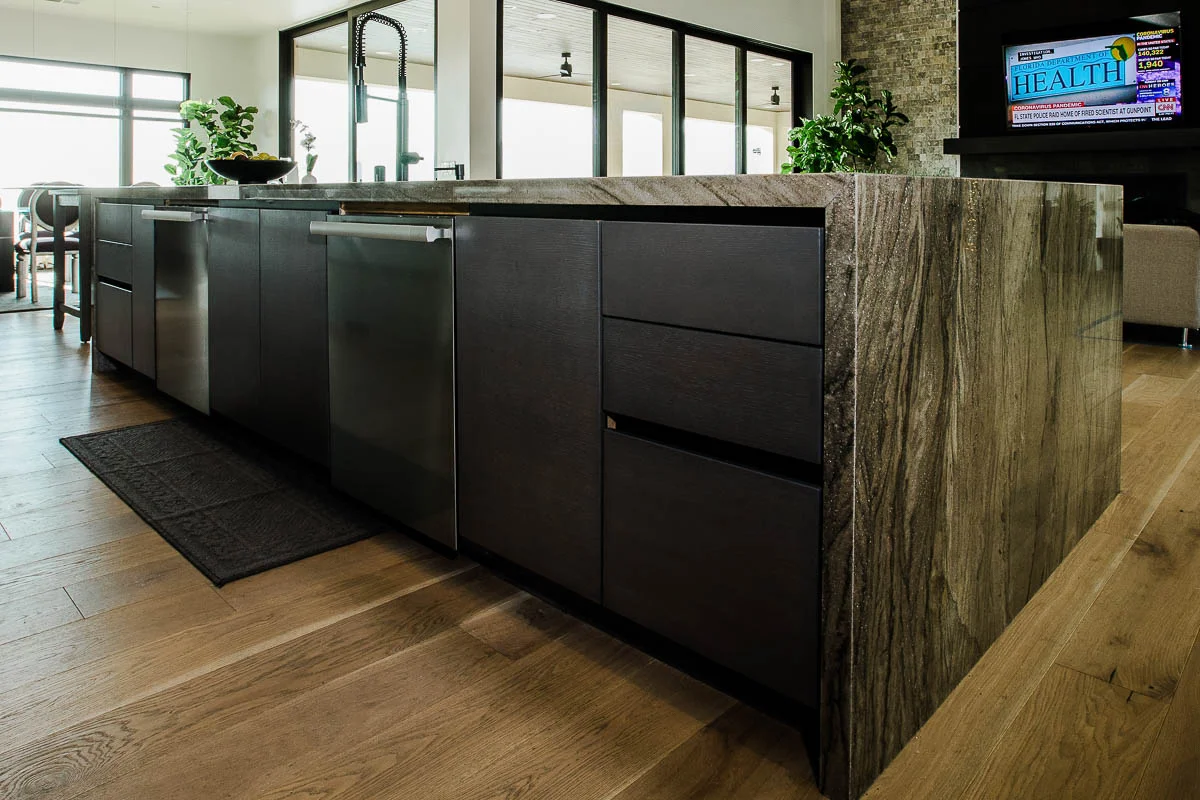
The material palette centers on reclaimed white oak, sourced from dismantled wine barrels and barn structures in Sonoma and Mendocino counties. These timbers carry decades of weather, wine stain, and use -- a patina that cannot be replicated. We milled the reclaimed oak into cabinet door panels, open shelving, and the massive 14-foot island top, finishing it with a clear hardwax oil (Rubio Monocoat) that preserves every mark and variation while providing food-safe surface protection. The reclaimed wood gives the kitchen an instant sense of history and place.
Complementing the oak, we selected a locally quarried limestone -- a warm cream tone with subtle fossil inclusions -- for the perimeter countertops and backsplash. The stone was honed to a matte finish that feels soft and natural under the hand. For the island's secondary prep surface (adjacent to the wood top), we installed a leathered Pietra Cardosa soapstone from the same Italian region that supplies many Napa Valley winery tasting rooms.
Wine Integration: Beyond the Wine Fridge
For a family that produces their own wine and hosts winemaker dinners regularly, standard wine storage was not sufficient. We designed a dedicated wine wall within the kitchen -- a floor-to-ceiling, temperature-controlled display case holding 120 bottles behind UV-filtering glass doors. The unit, built into the wall cavity between the kitchen and dining room, is visible from both spaces and serves as a living art installation that changes as bottles are added and consumed.
The butler's pantry houses additional wine storage -- a dual-zone Sub-Zero wine preservation unit holding 146 bottles for longer-term cellaring. This unit stores the client's library wines and special bottles at precise temperature and humidity levels, separate from the display wall's more frequently accessed collection. A decanting station within the butler's pantry includes a stainless prep sink, stemware storage, and a marble surface for letting wines breathe before service.
Within the main kitchen, we integrated a small wine serving station at the island's entertaining end: a 24-inch undercounter wine refrigerator set to serving temperature, a built-in Coravin station for accessing wines without pulling corks, and a pull-out drawer with individual compartments for wine accessories -- openers, pourers, foil cutters, and polishing cloths.
The Cooking Zone: Professional Capability, Residential Warmth
The client is a serious home cook who spent years studying French and Italian technique. The cooking zone needed to support everything from delicate sauce work to wood-fired-style roasting, while maintaining the warm, residential feel that distinguishes a great home kitchen from a commercial one.
We centered the cooking zone on a 48-inch Lacanche Sully range -- a French-made professional range with six gas burners, a plancha griddle, and two ovens (one gas convection, one electric). The Lacanche was specified in a custom color (a muted sage green) matched to the kitchen's painted accent color. Above the range, we designed a plaster hood surround with a gentle arch that references the barrel vaults found in Napa Valley wine caves. The hood insert (a 1,200 CFM Vent-A-Hood) is concealed within the plaster structure.
Flanking the range, floor-to-ceiling pantry cabinets provide cooking-adjacent storage for oils, spices, and frequently used ingredients. The cabinets feature our pull-out spice rack system with angled shelving for label-forward viewing, a pull-out sheet pan organizer, and a dedicated pull-out for the client's collection of copper cookware. A pot-filler faucet (Waterstone, in antique brass) is mounted on the backsplash to the left of the range, eliminating trips to the sink when filling heavy stockpots.
Indoor-Outdoor Flow: Dissolving the Boundary
The south-facing wall of the kitchen features a 20-foot La Cantina folding glass door system that opens completely, merging the kitchen with a covered outdoor terrace and the vineyard view beyond. When the doors are open, the kitchen island (positioned parallel to the opening) serves as the threshold between inside and out -- guests move freely between the indoor kitchen and the outdoor dining table, fire pit seating area, and poolside lounge.
The outdoor cooking station -- a built-in Kalamazoo gas grill, wood-fired pizza oven, and prep sink -- sits under the covered terrace immediately adjacent to the kitchen opening. We designed the outdoor cabinetry in marine-grade stainless steel with reclaimed oak accents matching the indoor kitchen, creating visual continuity between the two spaces. The flooring transitions seamlessly from interior Pietra Cardosa limestone to exterior matching stone on the terrace, with flush-set brass threshold trim at the door line.
Lighting for Day and Night
The kitchen's lighting design responds to the Napa Valley lifestyle, which revolves around long, light-filled days and warm, convivial evenings. During the day, the folding glass doors and a series of skylights above the cooking zone flood the space with natural light. The light quality in the Napa Valley -- warm, golden, filtered through the valley's characteristic haze -- is extraordinary, and we oriented the kitchen to capture it from sunrise through the long summer sunsets.
For evening use, we designed a layered lighting system on a Lutron RadioRA3 platform. Three hand-blown glass pendants from a Sonoma County artisan hang over the island, their warm amber glass casting a honeyed glow. Undercabinet LED strips provide task lighting at the perimeter counters. Recessed fixtures in the ceiling offer general illumination on a separate dimming circuit. And cabinet interior lighting behind glass-fronted doors creates a soft, museum-like accent. All circuits are programmed with four scenes: Morning, Cooking, Entertaining, and Cleanup.
The Finished Kitchen: Living With the Space
Two years after completion, the clients describe this kitchen as the soul of their home. Sunday mornings begin with coffee at the island, watching the morning fog burn off the vines. Afternoons bring trips to the garden to harvest tomatoes, peppers, and herbs that are prepped at the island's soapstone surface. Evenings unfold around the Lacanche range as dinner comes together, wine is poured from the serving station, and friends drift between the kitchen and the terrace.
The reclaimed oak has developed an even deeper patina with two years of use -- the wood absorbs the rhythms of the kitchen, growing richer and more characterful with every meal prepared on its surface. The limestone countertops have developed a gentle wear pattern near the sink that the clients love rather than lament. This is a kitchen designed not for a magazine photograph but for a life lived fully in the heart of wine country.
If you are building or renovating a home in Napa Valley, Sonoma County, or any of California's wine regions, we would love to discuss how your kitchen can reflect the extraordinary landscape and lifestyle around you. Our design process begins with understanding the place, the people, and the daily rituals that make a house a home.
Continue exploring kitchen design excellence
Related Articles
Napa Valley Kitchen Design
Design principles that define wine country kitchen sophistication
Read More →Wine Storage Solutions
Integrated wine storage design for serious collectors and enthusiasts
Read More →Marin County Family Kitchen
Another client story: designing for family life in Northern California
Read More →