Design Insights
Coastal California Kitchen Design Elements
Discover the defining elements of coastal California kitchen design, from salt-resistant materials to ocean-inspired palettes and indoor-outdoor flow.
Where the Pacific Ocean Shapes Every Design Decision
Kitchen Design Along California's Coastline
Coastal California kitchens exist in one of the most demanding and rewarding design environments anywhere. The salt air that corrodes metal, the intense UV light that fades finishes, the humidity that challenges wood stability, and the sand that infiltrates every surface -- these are not problems to solve but conditions to design for. The best coastal kitchens do not fight the ocean; they embrace it, using materials and palettes that reference the sea, respond to its light, and withstand its demanding climate.
From Malibu to Montecito, Half Moon Bay to La Jolla, we have designed kitchens in homes where the Pacific Ocean is a daily presence -- visible through windows, audible through open doors, and tangible in the salt mist that drifts through the house. Each coastal location has its own character (the bright, bleached quality of Southern California light differs dramatically from the moody, fog-filtered light of the Sonoma Coast), but they share design principles rooted in the ocean's influence.
This guide covers the specific design elements that define authentic coastal California kitchens -- not the seashell-and-driftwood decorating aesthetic often associated with "coastal style," but the genuine material, engineering, and design responses that make a kitchen thrive by the sea.
Materials That Withstand the Marine Environment
Salt air is the silent adversary of coastal kitchens. Airborne salt particles are corrosive to metals, moisture-attracting on surfaces, and can accelerate the degradation of certain wood finishes. Material selection must account for this environmental stress while maintaining the relaxed elegance that coastal living demands.
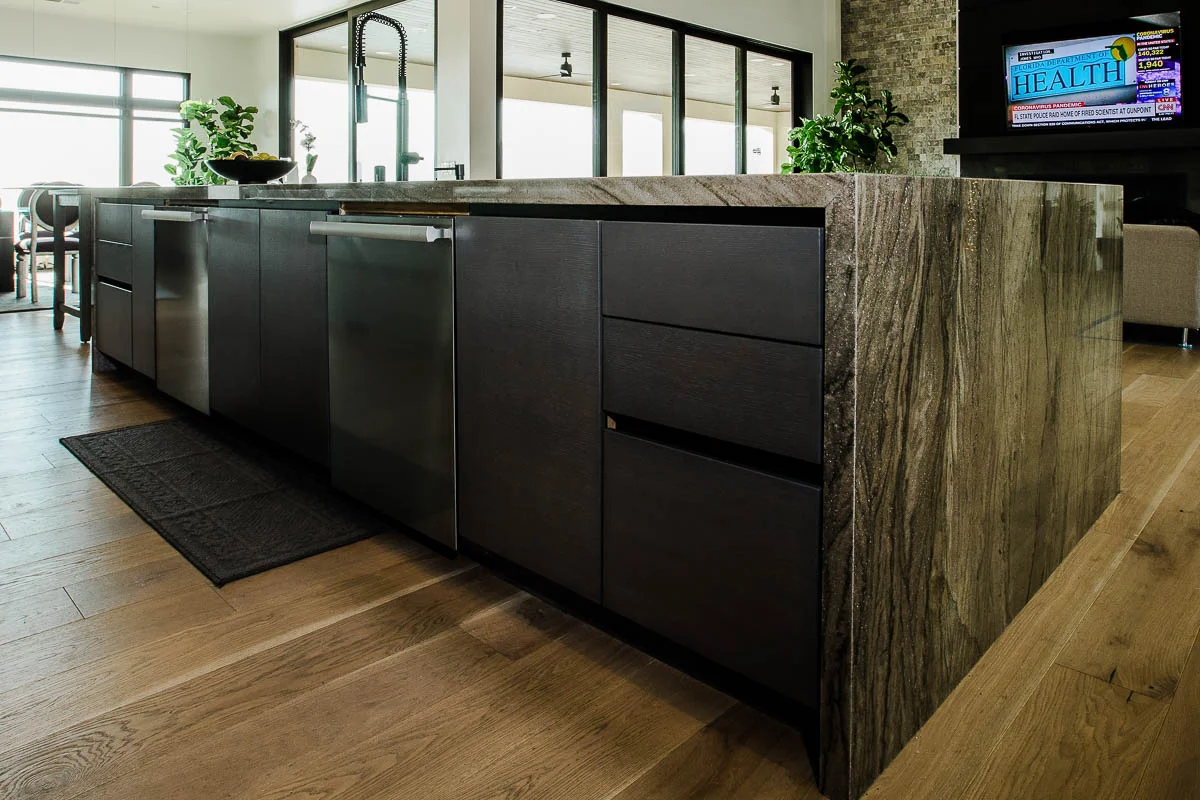
For cabinetry wood, teak and white oak are our primary recommendations for coastal installations. Teak's natural oils make it inherently resistant to moisture and salt -- it is the same wood used in marine shipbuilding for centuries. White oak's closed cellular structure resists moisture penetration far better than red oak or maple. Both species accept light finishes beautifully, supporting the sun-bleached aesthetic common in coastal homes. We often use a weathered gray or driftwood-toned stain that evokes aged wood found along the shoreline. Our material selection for coastal projects always begins with climate-appropriate species.
For painted cabinets in coastal environments, we specify marine-grade catalyzed lacquer with additional UV stabilizers -- the same class of finishes used on yacht interiors. Standard interior lacquer can yellow or chalk within 2 to 3 years in direct coastal sunlight; marine-grade formulations resist UV degradation for 10 years or more. White and soft blue-gray painted cabinets are perennial favorites in coastal kitchens, and the quality of the paint job matters enormously in bright, natural light that reveals every imperfection.
Hardware and Metal Finishes for Salt Air
Standard cabinet hardware will corrode in a coastal environment, sometimes within months. We have seen polished chrome pulls develop pitting and flaking within a single winter in exposed locations. Metal selection must prioritize corrosion resistance above all other considerations.
Solid brass (not brass-plated) is the gold standard for coastal hardware. The copper-zinc alloy that forms brass is naturally resistant to salt air corrosion and develops a beautiful green patina over time that many coastal homeowners embrace. Unlacquered brass is ideal -- the patina is the point, and it connects the kitchen to the maritime material tradition. For clients who prefer a consistent finish, lacquered brass provides protection while maintaining the original appearance, though the lacquer will need refreshing every 5 to 8 years in exposed coastal conditions.
Marine-grade stainless steel (316 grade, which contains molybdenum for enhanced salt resistance) is appropriate for areas of direct exposure -- faucets, sink accessories, and any hardware on outdoor-facing surfaces. Standard 304-grade stainless steel, while fine for inland installations, can develop tea staining (rust-colored spots) in heavy salt exposure. For metal finish selection in coastal homes, we always discuss the environmental exposure level before finalizing specifications.
The Light: Designing for Coastal Brilliance
Light defines the coastal kitchen. The reflection off the Pacific amplifies natural daylight to an intensity rarely found inland, and the quality of that light -- cool and crystalline in morning, warm and golden at sunset, dramatically atmospheric during fog -- shapes how every material reads in the space.
We design coastal kitchens to maximize ocean views and light capture. Floor-to-ceiling windows and folding glass walls are standard, often spanning the entire ocean-facing elevation. Cabinet layouts minimize visual obstruction between the cook and the view -- upper cabinets are eliminated on the ocean side entirely, replaced by open shelving or nothing at all. The kitchen's function follows the view: the sink almost always faces the ocean (why waste the best view on a blank wall?), and the island is oriented parallel to the water so seated guests look outward.
Material selections must account for how they read in intense, reflective coastal light. Dark colors absorb the abundant light beautifully, creating rich depth -- a navy blue island or dark walnut cabinetry can be stunning against a bright ocean backdrop. White cabinets in coastal light can feel blindingly bright unless tempered with warm-toned countertops and natural wood accents. We often recommend an off-white or warm cream rather than pure white for painted coastal cabinetry, as the ocean light adds its own coolness that can make pure white feel clinical.
Indoor-Outdoor Kitchen Flow
Coastal California living happens indoors and out interchangeably, and the kitchen should support this fluid movement. Folding glass doors (La Cantina, NanaWall, or Fleetwood depending on the wind exposure and span required) open the kitchen to a deck, patio, or outdoor dining area that feels like a natural extension of the interior space.
We design the transition thoughtfully. Flooring material should be continuous or complementary across the threshold -- large-format porcelain tile or honed limestone that reads the same inside and out creates a seamless visual plane. The countertop can extend through the wall opening to a pass-through or outdoor bar, making food and drink service between inside and out effortless. For a Malibu project, we ran the same honed Corsican limestone from the interior island through the opening to an outdoor bar counter, creating a single continuous surface that blurs the boundary completely.
Outdoor cooking stations adjacent to the kitchen are nearly universal in our coastal projects. A built-in grill, pizza oven, or smoker under a covered structure provides cooking options that complement the indoor kitchen. We design the outdoor cabinetry in marine-grade materials -- 316 stainless steel, teak, or HDPE (high-density polyethylene) panels that withstand direct salt exposure -- while maintaining aesthetic harmony with the indoor kitchen through consistent design language and complementary materials.
The Coastal Color Palette
Authentic coastal California color palettes draw from the actual landscape, not from a decorator's interpretation of "beachy." The Pacific coastline offers an astonishing range of tones: the blue-gray of morning fog, the warm sand of the beach, the silver-green of coastal sage, the bleached white of sun-dried driftwood, the deep navy of deep water, and the burnished gold of sunset cliffs.
We translate these natural tones into kitchen materials. Cabinetry in driftwood-gray stained white oak or soft sage-green paint connects to the coastal landscape. Countertops in warm cream limestone or sand-toned quartzite echo the beach. Hardware in aged brass or brushed bronze reflects the warm metallic tones of sunset light on water. The palette is calm, natural, and subdued -- coastal kitchens should feel like a deep breath, not a visual shout.
Color psychology plays a particular role in coastal design. Blues and greens lower blood pressure and reduce anxiety -- appropriate for a space meant to evoke the restorative quality of the ocean. Warm neutrals (sand, cream, driftwood) create a sense of groundedness that balances the expansive quality of ocean views. The combination of cool accent tones with warm base tones mirrors the fundamental character of the California coast itself: cool ocean, warm land.
Designing Your Coastal Kitchen
A truly successful coastal kitchen is designed in response to its specific site. The intensity of salt exposure, the direction of ocean views, the quality of local light, and the prevailing wind patterns all vary dramatically along California's 840 miles of coastline. A kitchen designed for a sheltered cove in Carmel faces different challenges than one perched on a Malibu bluff above the surf.
Our design process for coastal projects includes a detailed site assessment that evaluates these environmental factors and informs every material and design decision. The goal is a kitchen that looks and feels as though it belongs on its specific stretch of coast -- rooted in place, responsive to the environment, and as timeless as the ocean itself.
Continue exploring kitchen design excellence
Related Articles
Beverly Hills Kitchen Design
A different California luxury aesthetic: Hollywood glamour meets kitchen design
Read More →Lake Tahoe Mountain Kitchen
Mountain home design: another California climate-driven approach
Read More →Biophilic Kitchen Design
Bringing the natural world into your kitchen through design principles
Read More →