Design Insights
Preventing Damage in High-Traffic Kitchens
Essential tips for preventing damage in high-traffic kitchens to preserve your investment cabinetry.
Proactive Strategies for Kitchens That See Heavy Daily Use
Protecting Your Investment
A luxury kitchen built with premium hardwoods and handcrafted cabinetry represents a significant investment -- often $150,000 to $500,000 or more. In homes with active families, frequent entertaining, household staff, or all of the above, the kitchen absorbs more daily wear than any other room. The good news is that damage prevention is largely about smart design decisions made before installation and simple habits practiced afterward.
At PineWood Cabinets, we design kitchens to withstand real life, not just to look beautiful in photographs. We have seen what happens to cabinetry over five, ten, and twenty years of heavy use, and we build that knowledge into every project. Many of the damage-prevention strategies that matter most are invisible -- the right finish system, the correct hinge specification, the proper clearance around appliances -- but they make the difference between a kitchen that ages gracefully and one that shows its age prematurely.
Here are the strategies we recommend to keep high-traffic kitchens looking their best for decades.
Choosing Damage-Resistant Finishes
The finish on your cabinetry is the first line of defense against wear. For high-traffic kitchens, we strongly recommend catalyzed conversion varnish over standard lacquer. Conversion varnish chemically cross-links as it cures, creating a surface that is dramatically harder and more resistant to moisture, chemicals, and scratching than traditional finishes. It also resists yellowing over time, which matters for white and light-colored painted cabinets.
For natural wood finishes, the choice between oil and film-forming finishes involves trade-offs. Oil finishes like Rubio Monocoat penetrate the wood and are easy to spot-repair -- you can simply sand and re-oil a damaged area without refinishing the entire door. However, they offer less surface protection than a lacquer or varnish. In kitchens where children or pets are present, we often recommend a hybrid approach: oil-finished upper cabinets (which see less contact) paired with conversion-varnished base cabinets and drawers (which endure the most handling).
For painted cabinetry, we apply a minimum of one coat of primer, two coats of paint, and one coat of clear conversion varnish topcoat. This stack creates an exceptionally durable surface that resists fingerprints, grease, and scuffing. Matte and satin sheens hide minor imperfections better than high gloss, making them practical choices for busy households.
Hardware and Hinge Selection
Cabinetry hardware takes enormous abuse in a busy kitchen. Doors and drawers open and close thousands of times per year, and in multi-person households, not everyone is gentle. We exclusively specify Blum hinges and drawer slides for high-traffic kitchens. Their Blumotion soft-close mechanism absorbs the energy of a slammed door, preventing both the jarring noise and the stress on the cabinet box that causes joint failure over time.
For drawer slides, we use Blum Tandem or Movento full-extension slides rated for 100 to 130 pounds. This weight capacity matters because drawers accumulate heavy items -- cast iron pans, stacks of plates, bottles of olive oil -- and an overloaded drawer on a cheap slide will eventually sag, bind, or fail. We also specify Blum Tip-On mechanical opening for handleless drawers, which eliminates the fingerprints and smudges that accumulate on push-to-open surfaces.
Cabinet pulls and knobs should be securely mounted with machine screws from the back of the door, never with self-tapping screws that can strip out of MDF or plywood. We pre-drill all hardware holes with a CNC boring machine for perfect alignment and secure attachment. Loose hardware is not just an annoyance -- a pull that separates from a door can gouge the adjacent cabinet face.
Protecting Against Water and Heat
Water is the number one enemy of wood cabinetry. The areas around the sink, dishwasher, and refrigerator ice maker are chronic problem zones. We address this during construction by applying a waterproof membrane to the interior floor of the sink base cabinet and running the cabinet's back panel in marine-grade plywood rather than standard material. Adjustable stainless steel legs under the sink base -- rather than a solid plywood floor -- allow air circulation and make leak detection easy.
Heat damage typically occurs near the range or oven. We maintain a minimum 3-inch clearance between the range side and any cabinetry, and we install stainless steel heat shields on the interior faces of cabinets adjacent to the cooking surface. The dishwasher is another source of heat damage -- steam escaping from the top of the door can warp the underside of an adjacent countertop over time. We route a stainless steel drip edge along the countertop overhang above the dishwasher to deflect steam away from the wood.
Impact and Abrasion Protection
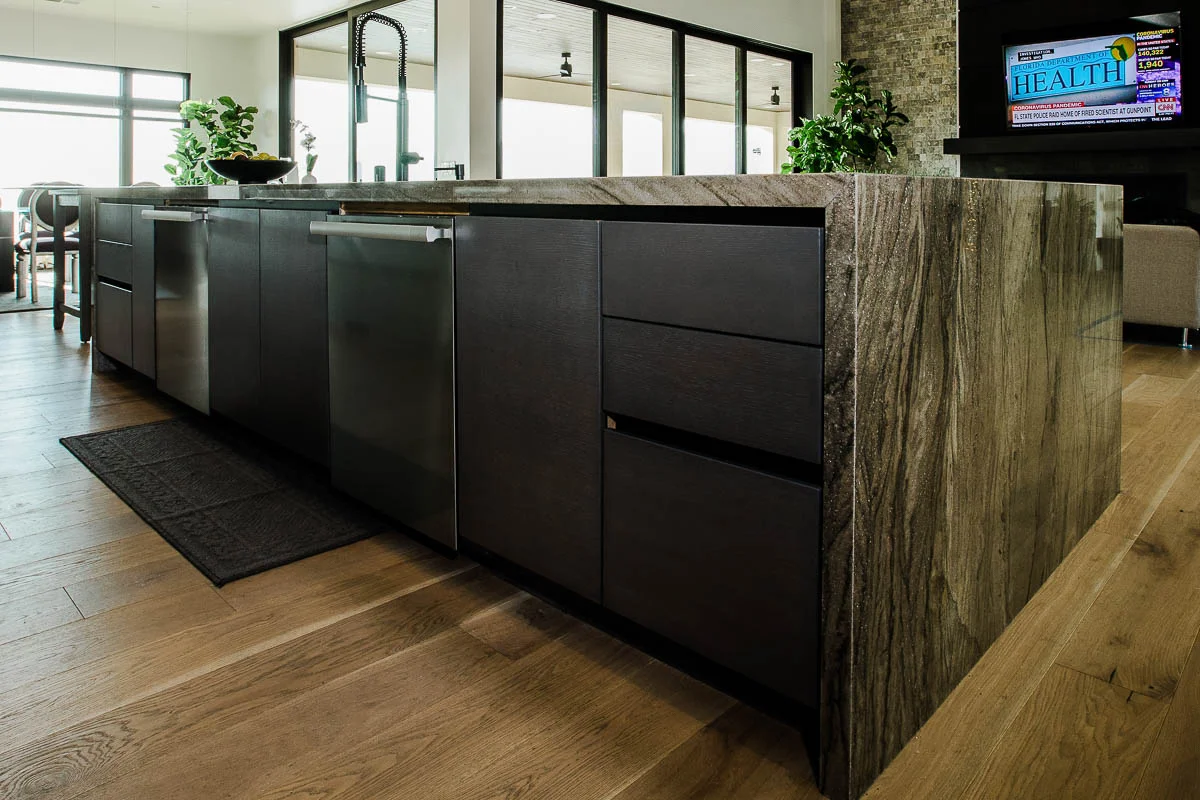
In kitchens that see heavy entertaining or professional catering, cabinet faces near traffic paths are vulnerable to bumps from serving trays, wine bottles, and moving bodies. We design traffic-adjacent cabinets with slightly recessed panels and beveled edges that are less likely to chip than sharp, square profiles. For island ends that face high-traffic areas, we sometimes specify a durable stone or metal panel rather than wood, creating a beautiful accent that also serves as armor.
Toe kicks take a beating from shoes, vacuum cleaners, and mop handles. We build toe kicks from marine-grade plywood with a durable melamine or lacquer finish, and we install them with clips that allow easy removal for cleaning. In homes with robotic vacuum cleaners, we design slightly taller toe kicks -- 5 inches instead of the standard 4 -- to ensure the vacuum can navigate freely without banging into cabinet faces.
UV Protection for Wood Cabinetry
California's abundant sunshine is wonderful for living but challenging for wood. UV light causes cherry to darken dramatically, walnut to lighten, and oak to yellow. If your kitchen has large windows or skylights, the sun creates uneven exposure patterns -- the cabinet face under the window may look dramatically different from the one in shadow after just a year. We recommend UV-filtering window films or automated shading systems to moderate exposure.
Our finish systems include UV-inhibiting additives that slow photochemical reactions in the wood, but no finish can completely prevent color change. During our design process, we discuss expected color evolution with every client so there are no surprises. In some cases, we deliberately choose species and finishes that age beautifully with sun exposure rather than fighting it.
Daily Habits That Protect Cabinetry
Beyond design and construction, simple daily practices extend the life of luxury cabinetry significantly. Wipe up spills immediately -- even on conversion-varnished surfaces, standing water can eventually penetrate seams and edges. Use cutting boards without fail to protect countertops, and never place hot pots directly on wood or stone surfaces. Open the range hood before you start cooking, not after the kitchen fills with grease-laden steam that settles on every surface.
For cleaning, a soft cloth dampened with warm water handles most situations. Avoid harsh chemical cleaners, especially those containing ammonia or bleach, which can damage finishes over time. For deeper cleaning, a mild solution of Murphy's Oil Soap works well on natural wood, while painted surfaces respond best to a gentle dish soap solution. We provide detailed care instructions with every project, and our professional maintenance services are available for annual touch-ups that keep cabinetry looking factory-fresh.
Protecting a high-traffic kitchen is not about being precious with the space. It is about making smart choices upfront and practicing simple habits so that your investment continues to perform beautifully through years of real, vigorous use. Contact our team to discuss designing a kitchen built to thrive under heavy use.
Continue exploring kitchen design excellence