Design Insights
Urban Luxury Kitchen Design in San Francisco
Discover urban luxury kitchen design in san francisco tailored to California's diverse luxury home markets.
Designing Luxury Kitchens for San Francisco Living
Introduction
San Francisco presents a design challenge unlike anywhere else in California. Where Silicon Valley estates might sprawl across two acres, a Pacific Heights Victorian or a SoMa penthouse demands that every square inch work harder. The city's luxury kitchen market has evolved into something genuinely distinctive: spaces that deliver world-class performance and visual impact within footprints that would feel limiting to less experienced designers.
After decades of designing custom kitchens throughout the Bay Area, we have come to appreciate the unique constraints and opportunities that San Francisco architecture provides. Victorian row houses, Edwardian flats, mid-century modern homes in the Sunset, converted industrial lofts south of Market, and contemporary new-builds in Mission Bay each call for different strategies. The common thread is a clientele that refuses to compromise on quality, expects exceptional craftsmanship, and wants their kitchen to feel both unmistakably San Francisco and timelessly elegant.
This guide draws on our experience with San Francisco projects to walk you through the design principles, material choices, and layout strategies that define urban luxury kitchen design in this extraordinary city.
Navigating Historic Architecture: Victorians, Edwardians, and Beyond
More than 70 percent of San Francisco's housing stock was built before 1940, and many of the city's most desirable homes are protected by historic preservation guidelines. Designing a luxury kitchen inside a Victorian or Edwardian home means respecting original architectural details such as crown moldings, ceiling medallions, and arched doorways while delivering modern performance underneath. We often specify inset cabinetry with beaded face frames that echo the home's existing millwork profiles, selecting species like white oak or alder that can be finished to complement period-appropriate trim.
Structural considerations are paramount. Removing walls to create open layouts frequently involves steel moment frames or engineered headers, especially given San Francisco's seismic requirements. We work closely with structural engineers early in the design process to understand what is feasible before committing to a layout. In many Victorian kitchens, we have found that a galley-to-L conversion with a compact island gives the best balance of openness and efficient workflow without requiring the removal of load-bearing walls.
Hardware and fixtures should reinforce the home's era while feeling fresh. Unlacquered brass knobs and bin pulls develop a living patina that pairs beautifully with Victorian-era aesthetics, while polished nickel bridge faucets nod to pre-war elegance without feeling costumey. The goal is always a kitchen that looks as though it belongs in the home but functions entirely in the present.
Maximizing Compact Footprints Without Sacrificing Luxury
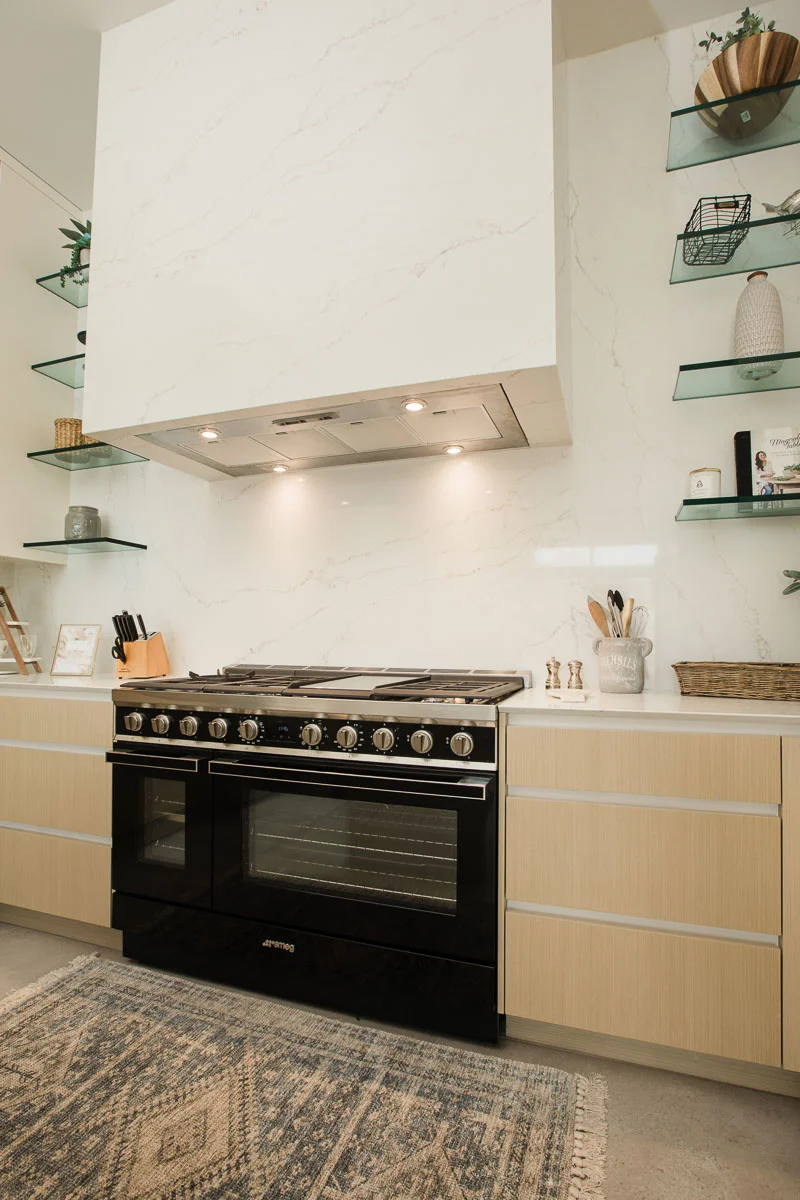
A typical San Francisco luxury kitchen might occupy 120 to 200 square feet, a fraction of what suburban estates offer. The key to making a smaller kitchen feel genuinely luxurious lies in material density and design precision. Instead of spreading a modest budget across a large space, urban kitchens concentrate premium materials into a tighter area. Calacatta Borghini marble on the countertops and full-height backsplash, custom walnut cabinetry with soft-close European hinges, and a fully integrated Sub-Zero and Wolf appliance package can transform 150 square feet into the most impressive room in the house.
Vertical space becomes critical. We routinely design cabinetry that extends to the ceiling, sometimes reaching ten or eleven feet in Victorians with original ceiling heights. Upper cabinets with glass fronts and interior LED lighting create a sense of depth and display, while full-extension pull-out shelves in lower cabinets ensure nothing gets lost in the back. Appliance garages built into corner cabinets keep countertops clear, and custom spice drawers flanking the range turn every inch into working storage.
Islands in San Francisco kitchens are often smaller than their suburban counterparts, sometimes just 48 by 30 inches, but they can still be extraordinary. A butcher-block-topped prep island on locking casters, a marble-clad waterfall island with integrated storage, or a cantilevered peninsula that preserves walkway clearance are all solutions we have executed successfully in city kitchens.
Indoor-Outdoor Flow and the San Francisco Climate
San Francisco's famously temperate but fog-prone climate creates specific design considerations that differ from kitchens in warmer parts of California. While homes in Napa or Los Angeles might feature fully retractable glass walls, San Francisco kitchens benefit from a more measured approach to indoor-outdoor connection. Large steel-framed windows and French doors that open to a rear garden or deck bring in natural light and extend the visual space without leaving the kitchen exposed to the afternoon fog that rolls through the Avenues.
Material selection should account for the city's higher humidity levels compared to inland California. We recommend marine-grade finishes on any cabinetry near exterior openings, and we avoid highly porous natural stones in areas subject to condensation. Engineered quartz or honed granite perform better than polished marble in zones adjacent to windows that may collect moisture during foggy mornings. For the backsplash and less exposed surfaces, natural stone remains an excellent choice that brings warmth and character to the design.
Neighborhood-Specific Design Considerations
San Francisco's neighborhoods each carry distinct architectural identities that inform kitchen design. In Pacific Heights and Presidio Heights, we tend toward refined traditional aesthetics: shaker-profile doors in painted finishes, honed Carrara marble, and brass or nickel hardware. These neighborhoods favor timeless elegance that complements the grand Edwardian and Georgian homes prevalent there.
In SoMa and Mission Bay, where converted warehouses and modern new-builds dominate, our designs lean contemporary: flat-panel cabinetry in rift-cut white oak, Dekton or Neolith countertops, integrated appliance panels, and matte black hardware. The industrial bones of these spaces call for a cleaner, more minimalist vocabulary. Exposed concrete ceilings and steel columns become part of the kitchen's design language rather than elements to hide.
Noe Valley and the Castro present an interesting middle ground, often featuring updated Victorians where homeowners want a kitchen that bridges traditional architecture and modern lifestyle. Here, transitional designs work beautifully: a shaker door in a natural wood finish, quartz countertops that mimic the look of marble without the maintenance, and mixed-metal hardware that feels collected rather than matched.
Smart Technology for Urban Living
San Francisco homeowners tend to be early adopters of smart kitchen technology, and urban kitchens particularly benefit from it. Induction cooktops with integrated ventilation downdrafts eliminate the need for a bulky overhead hood, reclaiming valuable visual and physical space. Smart faucets with touchless activation and measured dispensing reduce water waste in a drought-conscious city, while under-cabinet tablet mounts and integrated wireless charging stations keep devices accessible without cluttering countertops.
We also integrate whole-home systems into the kitchen design. Lutron or Ketra lighting control allows homeowners to shift from bright task lighting during meal prep to warm ambient light for evening entertaining with a single voice command. Integrated speakers disappear into cabinetry soffits or ceiling panels, and motorized window shades respond to sunlight levels throughout the day. The technology should be invisible until you need it, seamlessly woven into cabinetry and millwork so the kitchen always looks like a beautifully designed room rather than a tech showroom.
Bringing It All Together
Urban luxury kitchen design in San Francisco is ultimately about editing. Where a suburban estate kitchen has room for every feature imaginable, a San Francisco kitchen demands discipline: selecting fewer, better elements and executing them at the highest level. A single slab of bookmatched Calacatta marble can define an entire kitchen. Custom cabinetry built to the millimeter turns awkward alcoves into elegant storage. Professional-grade appliances scaled for residential use deliver restaurant performance without overwhelming the space.
The most successful San Francisco kitchens we have designed share a quality that is difficult to articulate but immediately recognizable: they feel effortless. Every design decision, every material choice, every hardware selection has been made with intention, and the result is a kitchen that functions beautifully, looks extraordinary, and feels completely at home within the architecture of the city. If you are considering a luxury kitchen project in San Francisco, we invite you to explore our design process and see how we can bring this level of thoughtfulness to your home.
Continue exploring kitchen design excellence
Related Articles
Silicon Valley Kitchen Design
Tech-forward luxury kitchens for the Bay Area's innovation corridor
Read More →