Design Insights
Appliance Maintenance in Custom Kitchens
Essential tips for appliance maintenance in custom kitchens to preserve your investment cabinetry.
How Proper Appliance Maintenance Preserves Custom Cabinetry and Finishes
Protecting Your Kitchen Investment
A custom kitchen represents one of the most significant investments in your home -- often $150,000 to $400,000 or more for a fully bespoke installation in California. The cabinetry, countertops, and finishes are designed to last decades. But poorly maintained appliances can silently damage the very surroundings they sit within. Steam from a malfunctioning dishwasher warps adjacent cabinet panels. A refrigerator with dirty condenser coils radiates excess heat that yellows nearby painted finishes. An unserviced range hood fails to capture grease, which settles on every surface.
The relationship between appliance maintenance and cabinetry preservation is one that many homeowners overlook. In our years of building custom kitchens across the Bay Area, Los Angeles, and wine country, we have seen firsthand how a neglected appliance can cause thousands of dollars in damage to surrounding millwork. The good news is that most of this damage is entirely preventable with a straightforward maintenance routine.
This guide focuses specifically on how appliance maintenance intersects with custom cabinetry protection. We will walk through each major appliance category, explain the specific risks to surrounding materials, and provide maintenance schedules that keep both your appliances and your cabinetry in pristine condition.
Dishwasher Maintenance and Cabinet Protection
The dishwasher is the single greatest threat to surrounding cabinetry in any kitchen. Every wash cycle produces hot, moisture-laden air. When the door seal fails or the machine is not properly maintained, that steam escapes into the cabinet cavity and attacks wood from the inside. We have seen white oak panels delaminate, maple face frames warp, and hand-applied lacquer finishes blister -- all from dishwasher steam damage that went unnoticed for months.
Check the door gasket every three months by running your hand along the rubber seal while the machine is operating. If you feel heat or moisture escaping, the gasket needs replacement. Clean the gasket monthly with a damp cloth and mild soap to prevent mold growth and maintain its flexibility. For panel-ready dishwashers like the Miele G 7000 series or Bosch Benchmark that integrate with custom cabinet fronts, pay particular attention to the junction between the appliance panel and the surrounding cabinetry -- this seam is where steam infiltration most commonly occurs.
Clean the dishwasher filter assembly every two weeks. A clogged filter forces the machine to work harder and run hotter, increasing steam output. Run an empty cycle with a dishwasher-specific cleaner (we recommend Finish Dishwasher Cleaner or white vinegar) monthly to dissolve mineral buildup in the spray arms and heating element. In areas with hard water -- common in parts of the Central Valley and Southern California -- consider installing a water softener to reduce mineral deposits throughout the system.
Refrigerator and Freezer Care for Custom Panels
Panel-ready refrigerators from Sub-Zero, Thermador, and Gaggenau are standard in our custom kitchen builds. These units accept custom cabinetry panels that make the refrigerator visually disappear into the kitchen. But those panels add weight to the doors, and the appliance generates heat that directly contacts the surrounding cabinet enclosure.
Clean the condenser coils every six months -- this is the single most important maintenance task for a built-in refrigerator. Dusty coils force the compressor to run longer and hotter, radiating excess heat into the cabinet surround. On Sub-Zero units, the condenser is typically accessed through the top grille. Use a condenser coil brush and vacuum to remove dust buildup. We have measured temperature differences of 15 to 20 degrees Fahrenheit between clean and dirty condenser situations at the cabinet panel surface.
Door hinges on panel-ready units carry more weight than standard models and should be inspected annually. A sagging door misaligns the seal, allowing cold air to escape and condensation to form on surrounding surfaces. Check door alignment by placing a dollar bill in the gasket and closing the door -- you should feel resistance when pulling the bill out along the entire perimeter. If the bill slips freely at any point, the hinge or gasket needs attention. Many manufacturers recommend professional calibration of panel-ready door hinges every two years.
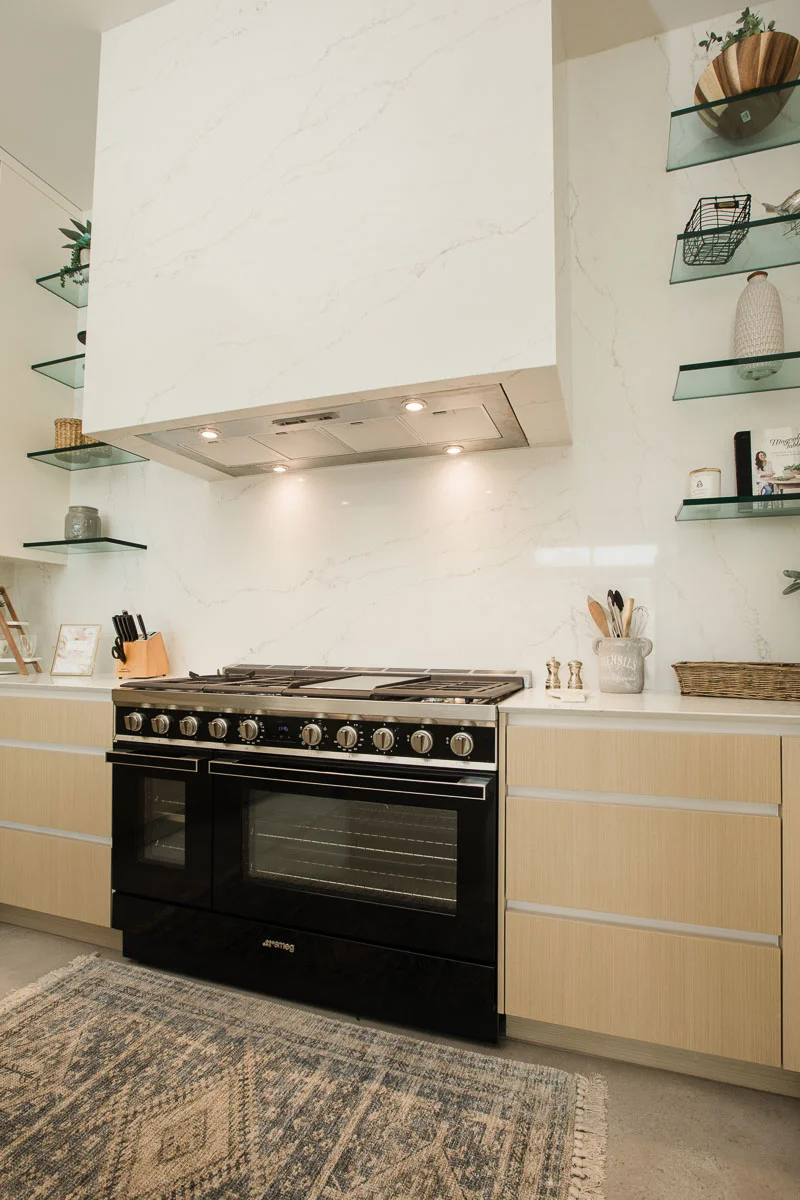
Range Hood Maintenance and Grease Protection
A properly functioning range hood is your cabinetry's first line of defense against airborne grease, smoke, and cooking moisture. When the hood is not maintained, grease particles settle on every surface within a 10-foot radius of the cooktop -- cabinet faces, crown molding, glass-front doors, and decorative hardware all become coated in a sticky film that attracts dust and causes long-term finish damage.
Clean or replace range hood filters monthly. Baffle filters (standard on professional-grade hoods from Vent-A-Hood, Zephyr, and Best) should be soaked in hot water with degreasing dish soap or run through the dishwasher. Mesh filters should be replaced every three to six months, as they cannot be fully cleaned. Charcoal recirculation filters, used in ductless installations, need replacement every four to six months as they lose their absorption capacity.
Check the ductwork annually for grease accumulation. Over time, grease builds up inside the exhaust duct, reducing airflow and creating a fire hazard. For homes in areas like the Berkeley hills or Malibu where wildfire risk is elevated, this inspection is even more critical. We recommend professional duct cleaning every two to three years for heavy cooks. Also verify that the exterior vent damper opens and closes freely -- a stuck damper effectively turns your hood into a recirculation unit regardless of how clean the filters are.
Oven and Range Care Near Custom Cabinetry
Professional ranges from Wolf, Thermador, and La Cornue generate significant heat during operation, particularly during self-cleaning cycles where interior temperatures can reach 900 degrees Fahrenheit. Custom cabinetry adjacent to these appliances requires specific protection measures and ongoing maintenance vigilance.
During our installation process, we always install heat shields between ranges and adjacent cabinetry. But these shields only work if the range is properly maintained. A malfunctioning door seal on an oven can direct heat laterally rather than containing it within the cavity. Inspect oven door gaskets every six months and replace them if they show cracks, hardening, or compression damage.
We advise our clients to use the self-cleaning function no more than two to three times per year, and to remove any items from adjacent cabinets during the cycle. The sustained extreme heat can affect the finish on nearby cabinet panels, especially lacquered or painted surfaces. For routine cleaning between self-clean cycles, a paste of baking soda and water applied to the interior surfaces avoids the extreme temperatures while keeping the oven clean. Clean range burner grates and drip pans monthly to prevent grease accumulation that can produce excess smoke during cooking.
Creating a Maintenance Schedule
The most effective approach to appliance maintenance in a custom kitchen is a structured schedule. We provide every client with a customized maintenance calendar as part of our post-installation care package. Here is a simplified version of the schedule we recommend.
Weekly tasks include wiping down appliance exteriors with appropriate cleaners (stainless steel cleaner for exposed surfaces, the same gentle cleaner you use on your cabinet finishes for panel fronts), checking for water leaks around the dishwasher and refrigerator, and cleaning range hood filters if you cook frequently. Monthly tasks include cleaning the dishwasher filter, inspecting door gaskets on all appliances, running a dishwasher cleaning cycle, and wiping down the interior of the microwave and oven.
Quarterly tasks include checking refrigerator and freezer temperature calibration, inspecting the dishwasher drain hose for kinks or leaks, and testing range hood airflow. Semi-annual tasks include cleaning refrigerator condenser coils, inspecting oven door gaskets, and checking all appliance electrical connections. Annual tasks include professional inspection of gas connections, duct cleaning assessment, and a comprehensive review of all appliance-to-cabinetry interfaces for signs of heat damage, moisture intrusion, or finish degradation.
When to Call a Professional
Not all appliance maintenance is DIY territory. For high-end appliances in custom kitchen environments, we recommend establishing relationships with authorized service providers before problems arise. Sub-Zero, Wolf, and Cove offer factory-certified service through their dealer network. Miele and Gaggenau have dedicated service teams in major California metro areas. Having a trusted technician who understands how your appliances interact with custom cabinetry is invaluable.
Call a professional immediately if you notice water pooling around or under any appliance, unusual noises from the dishwasher or refrigerator compressor, a gas smell near the range (evacuate first and call the gas company), visible warping or discoloration on cabinet panels adjacent to any appliance, or a range hood that no longer effectively clears cooking smoke. Early intervention on these issues can prevent minor appliance problems from becoming major cabinetry repair projects. Our team is always available to assess whether appliance-related issues have affected your custom cabinetry and recommend appropriate remediation.
Continue exploring kitchen design excellence
Related Articles
Cleaning Products for Premium Finishes
The right products to safely clean and preserve your custom cabinet finishes
Read More →Long-Term Care for Investment Cabinetry
Comprehensive strategies to protect and maintain your custom kitchen for decades
Read More →Seasonal Care for Wood Cabinetry
How California's climate changes affect your wood cabinetry throughout the year
Read More →