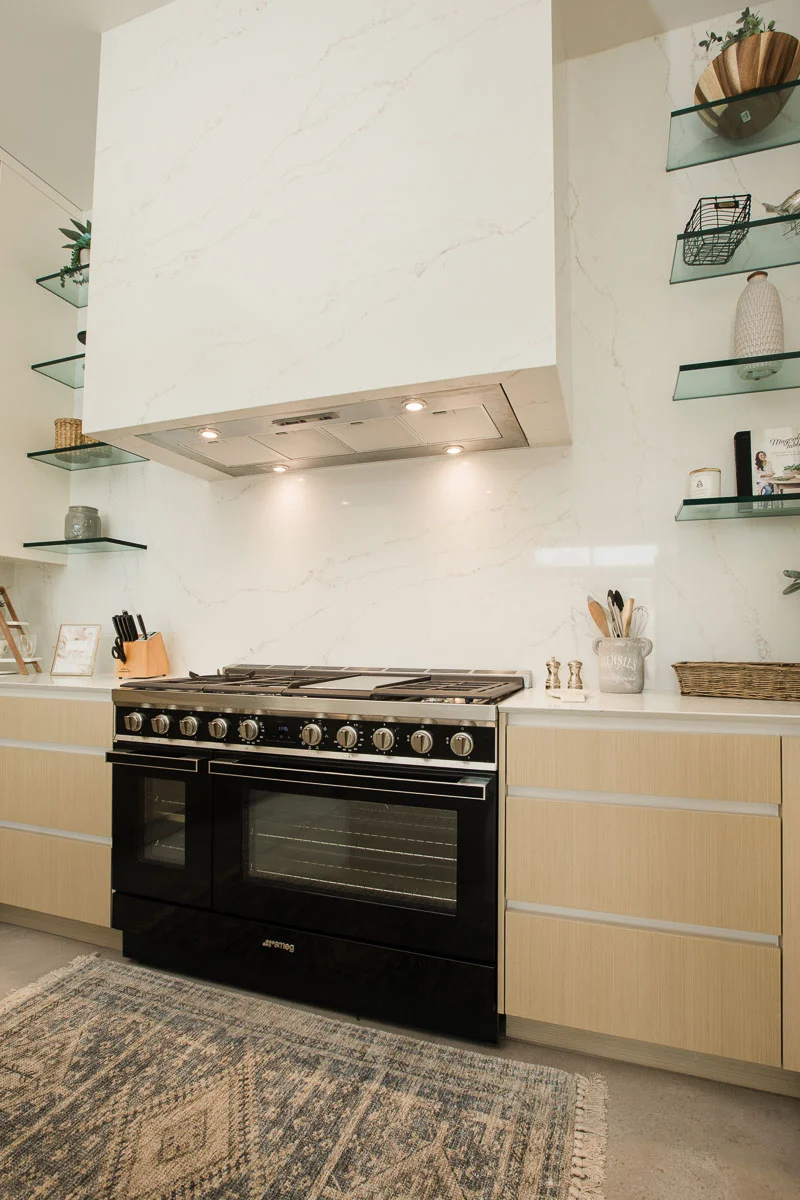
Design Insights
Energy-Efficient Kitchen Appliances
Learn about energy-efficient kitchen appliances for eco-conscious luxury kitchen design.
Choosing Appliances That Cook Beautifully While Consuming Less
Performance and Efficiency in Harmony
The kitchen is the most energy-intensive room in any home. Between refrigeration, cooking, ventilation, dishwashing, and lighting, a luxury kitchen can account for 15 to 25 percent of total household energy consumption. For California homeowners navigating rising utility rates and increasingly strict energy codes, selecting efficient appliances is both a financial and environmental priority. The good news is that today's premium appliances deliver better cooking performance than ever while using significantly less energy than models from even five years ago.
At PineWood Cabinets, appliance selection is integral to our kitchen design process. The appliances you choose influence cabinet dimensions, ventilation requirements, electrical circuits, and even the structural support needed for heavy professional-grade equipment. We work with clients to identify appliances that align with their cooking style, efficiency goals, and design aesthetic, then design the cabinetry to integrate them seamlessly.
This guide covers the major appliance categories and highlights the energy- efficient options that perform exceptionally in luxury kitchen environments throughout California.
Induction Cooktops: The Efficiency Champion
Induction cooking has transformed the conversation about kitchen energy efficiency. An induction cooktop transfers approximately 90 percent of its energy directly to the cookware through electromagnetic induction, compared to about 40 percent for gas and 70 percent for traditional electric radiant cooktops. This means faster boiling times, more precise temperature control, and dramatically less wasted heat in your kitchen.
Premium induction units from Gaggenau, Miele, and Thermador offer features that rival or surpass gas cooking for serious home chefs. The Gaggenau 400 Series full-surface induction cooktop allows you to place cookware anywhere on the surface, automatically detecting size and position. Miele's TempControl feature uses an integrated sensor to maintain precise pan temperatures, virtually eliminating the risk of burning. Wolf's induction range combines a powerful induction cooktop with a dual-convection oven in a single freestanding unit.
From a cabinetry design perspective, induction cooktops generate less ambient heat than gas, which reduces the thermal stress on adjacent cabinet panels and countertop materials. They also eliminate the need for gas line installation, simplifying both the plumbing work and the ventilation requirements. However, induction requires a dedicated 40 to 50-amp electrical circuit, which our team coordinates with the electrician during the design phase. California's new building codes increasingly favor electric cooking, making induction an especially forward-thinking choice for new construction and major renovations.
Refrigeration: Column Systems and Smart Cooling
Refrigeration runs continuously and represents the single largest appliance energy consumer in most kitchens. Energy Star certified refrigerators use at least 15 percent less energy than federal minimum standards, but the variation between models is substantial. Choosing the right configuration and features can reduce refrigeration energy costs by 30 to 50 percent compared to older or less efficient units.
Column refrigeration from Sub-Zero, Thermador, and Gaggenau offers the best combination of efficiency and luxury kitchen integration. These separate full- height refrigerator and freezer columns are panel-ready, accepting custom fronts that match your cabinetry exactly. Sub-Zero's new Designer Series columns feature their NASA-derived air purification technology and dual compressors that maintain precise temperature zones. Importantly, column units allow you to size refrigeration precisely to your needs rather than accepting a fixed combined unit size.
For supplemental refrigeration, undercounter units are increasingly efficient. Drawer refrigerators from Sub-Zero and Fisher and Paykel placed near the cooking zone reduce trips to the main refrigerator, and undercounter beverage centers from Perlick and True keep entertaining supplies at the ready without impacting the main unit's temperature stability. Our design team can help you determine the right refrigeration configuration for your household size and cooking habits.
Dishwashers: Water and Energy Savings
Modern dishwashers have achieved remarkable efficiency gains. A current Energy Star certified dishwasher uses less than four gallons of water per cycle, compared to the 20 or more gallons typically used when washing the same load by hand. Energy consumption has dropped correspondingly, with top models using under 250 kWh per year.
Miele's G 7000 series dishwashers represent the current efficiency benchmark in the luxury segment. Their AutoDos system precisely dispenses detergent for each load, eliminating waste from manual dosing. The EcoStart feature allows you to set the dishwasher to run when electricity rates are lowest, and their heat exchanger drying system uses residual heat rather than an energy-intensive heating element. Bosch's 800 Series offers similar efficiency in a wider range of configurations, including their compact ADA-compliant models that fit in non-standard cabinet openings.
In luxury kitchens, we frequently install two dishwashers: a full-size unit for daily use and a single-drawer unit from Fisher and Paykel in the island for quick loads and entertaining. Two smaller loads often use less water and energy than one overloaded cycle, and the convenience factor alone justifies the investment for most clients. Panel-ready models from all major manufacturers accept custom door fronts that integrate invisibly with the surrounding cabinetry.
Ventilation: Efficient Air Management
Range hoods and ventilation systems are often overlooked in the efficiency conversation, but they play a critical role. A hood that is too powerful wastes energy by moving more air than necessary and creates negative pressure that pulls conditioned air out of the home. A hood that is undersized fails to capture cooking fumes and moisture, degrading indoor air quality and allowing grease to accumulate on cabinetry and ceilings.
The key is matching hood CFM to your cooktop's heat output. The general rule is 100 CFM per 10,000 BTU for gas cooking, or 200 CFM minimum for any induction or electric cooktop. Variable-speed blowers that automatically adjust airflow based on cooking activity, available from Zephyr, Best, and Broan, provide the right amount of ventilation without constant high-speed operation. Some models include heat sensors that ramp up automatically when they detect cooking activity and ramp down when you finish.
For island installations, downdraft ventilation systems from Gaggenau and Bora eliminate the need for overhead hoods entirely. These systems rise from within the countertop or are integrated flush with the cooktop surface, pulling fumes down and out through ductwork beneath the floor. They are less effective than overhead hoods for heavy cooking but perform well for moderate use and preserve the open sightlines that make island kitchens so appealing.
Ovens and Steam Cooking
Convection ovens use fans to circulate hot air evenly around food, cooking faster and at lower temperatures than conventional ovens. This translates to 20 to 30 percent energy savings per cooking cycle. Dual-convection systems, found in premium wall ovens from Wolf, Miele, and Gaggenau, use two fans and two heating elements to create even more uniform heat distribution, further reducing cooking times and energy use.
Combination steam ovens are the most energy-efficient cooking option for many foods. Steam transfers heat far more efficiently than dry air, cooking vegetables, proteins, and grains faster while retaining more moisture and nutrients. Miele's combination steam oven can replace both a traditional oven and a microwave for many tasks, consolidating two appliances into one and reducing both energy consumption and the cabinet space required. The Gaggenau combi-steam oven offers similar functionality with a focus on precision temperature control that appeals to advanced home cooks.
LED Lighting and Smart Controls
Kitchen lighting accounts for a meaningful portion of energy use, particularly in large spaces with extended operating hours. LED technology has made efficient lighting the default choice, using 75 percent less energy than halogen and lasting 25 times longer. Under-cabinet LED strips from WAC Lighting and Kichler provide bright, even task illumination for food preparation while consuming just 5 to 8 watts per linear foot.
Smart lighting controls from Lutron's Caseta and RadioRA systems allow precise dimming and scheduling that further reduces energy waste. Occupancy sensors in pantries and walk-in closets ensure lights are never left on in unoccupied spaces. Tunable white LED systems that adjust color temperature throughout the day, cooler and brighter for morning task lighting, warmer and softer for evening entertaining, are both energy-efficient and mood-enhancing. We integrate lighting specifications into every custom kitchen project to ensure the cabinetry and lighting work together seamlessly.
Continue exploring kitchen design excellence
Related Articles
Energy-Efficient Kitchen Design Solutions
Holistic design strategies that reduce kitchen energy consumption
Read More →Eco-Friendly Materials in Custom Cabinetry
Sustainable material choices for environmentally conscious kitchens
Read More →Home Automation Integration
Smart systems that optimize appliance performance and efficiency
Read More →