Design Insights
Home Automation Integration in Kitchens
Explore home automation integration in kitchens in modern luxury kitchen design and functionality.
Integrating Smart Technology Seamlessly into Custom Cabinetry and Kitchen Design
The Intelligent Kitchen
Home automation in the kitchen has moved well beyond novelty voice commands and WiFi-connected appliances. In the luxury kitchens we design across California, automation integrates lighting, ventilation, audio, video, motorized cabinetry, water systems, and appliance controls into a unified system that enhances daily life without demanding attention or cluttering the design. The best smart kitchen is one where the technology is invisible until you need it.
The challenge with kitchen automation is not the technology itself, which has matured rapidly, but the integration into custom cabinetry and architectural finishes. Sensors need to be hidden. Wiring must be routed through cabinet structures without compromising joinery. Screens and controls need to be accessible but not dominant. This is where the collaboration between a custom cabinet maker and a home automation integrator becomes essential, and it is a collaboration we facilitate on every smart kitchen project at PineWood Cabinets.
This guide covers the automation systems most relevant to kitchen design, with practical guidance on how each integrates with custom cabinetry and what to plan for during the design phase.
Automated Lighting: Scenes and Schedules
Lighting is the most impactful and most mature automation category in kitchen design. A Lutron RadioRA 3 or Ketra system controls every light in the kitchen, including under-cabinet task lighting, overhead recessed fixtures, pendant lights, interior cabinet lighting, and toe-kick accent lighting, from a single interface. Programmed lighting scenes allow you to switch between cooking mode with bright task lighting, entertaining mode with dimmed ambient lighting, and night mode with subtle toe-kick illumination, all with a single button press or voice command.
From a cabinetry perspective, automated lighting requires careful planning during the design phase. LED drivers and transformers for under-cabinet and in-cabinet lighting need to be housed in accessible but concealed locations. We typically allocate a dedicated compartment within an upper cabinet or above the refrigerator for these components, with a ventilated panel and easy access for service. Low-voltage wiring for LED strips routes through channels routed into the underside of upper cabinets, invisible when looking up from below.
Tunable white LED systems from Ketra and DMF Lighting adjust both brightness and color temperature throughout the day. Morning light shifts to a cool, energizing 4000K. Evening light warms to a cozy 2700K. This circadian lighting creates a more pleasant and healthful kitchen environment and happens automatically based on time of day, with manual override always available.
Motorized Cabinet Systems
Motorized cabinet opening and closing systems add both convenience and accessibility to kitchen cabinetry. Blum's Servo-Drive system provides electrical opening assistance for drawers and lift-system doors. A light touch on the drawer front or door triggers the motor, which opens the drawer or lifts the door smoothly and silently. The Servo-Drive for Aventos lift systems is particularly impressive, raising heavy full-height doors that would be difficult to lift manually.
We integrate Servo-Drive into high-traffic locations where hands-free operation adds genuine value: the trash pull-out that opens with a hip bump when your hands are full of vegetable peelings, the tall pantry door that rises overhead at a touch, and the island drawers that open automatically when you approach. The electrical requirements are minimal, a single power supply serves up to eight Servo-Drive units, and the wiring routes cleanly through the cabinet structures we build.
More advanced motorized systems include electrically powered lift shelves that bring upper cabinet contents down to counter level, motorized countertop sections that rise to reveal hidden storage or appliances, and retractable television screens that emerge from custom cabinets. These systems require structural reinforcement and dedicated power circuits that must be planned during the design phase and built into the cabinet construction from the beginning.
Connected Appliances and Central Control
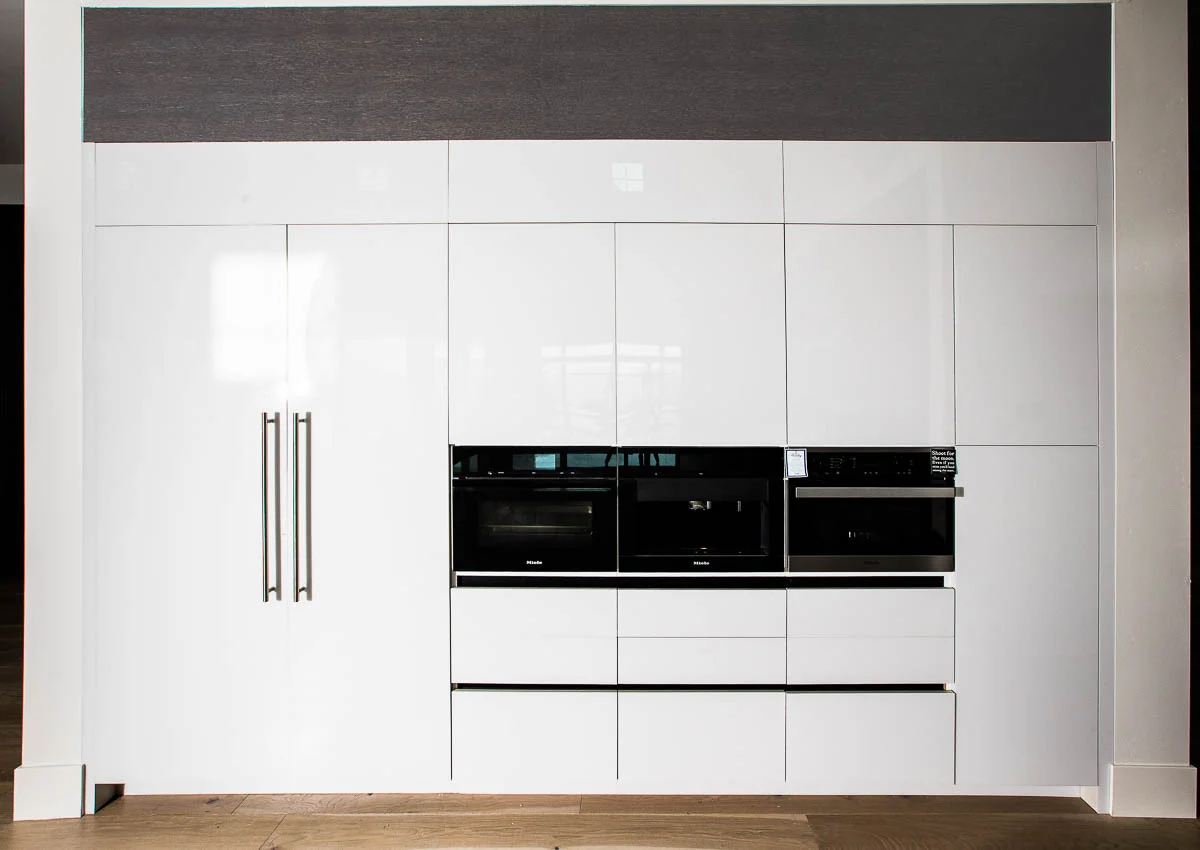
Major appliance manufacturers have invested heavily in WiFi connectivity and smart features. Sub-Zero and Wolf's Connected by Cove system, Miele's Miele@home, Thermador's Home Connect, and Bosch's Home Connect platform allow monitoring and control of ovens, cooktops, dishwashers, and refrigerators from a smartphone or a centralized home automation system.
The practical benefits of connected appliances in a luxury kitchen include preheating the oven remotely, receiving alerts when a dishwasher cycle completes, monitoring refrigerator temperature from anywhere, and adjusting cooktop settings from across the room. For clients with whole-home automation systems like Crestron, Control4, or Savant, these appliance platforms integrate into the central control system, adding the kitchen to the unified interface that also manages lighting, climate, security, and entertainment throughout the home.
Our role in connected appliance integration is primarily about infrastructure. We ensure that ethernet drops and strong WiFi coverage reach every appliance location, that power outlets are positioned exactly where each appliance needs them, and that the cabinet openings and ventilation provisions accommodate any additional sensors or antennas that connected models require. We also coordinate with the home automation integrator early in the design process to ensure that control panel locations, speaker placements, and display screen positions are incorporated into the cabinetry design rather than added as afterthoughts.
Touchless Faucets and Water Management
Touchless faucets from Grohe, Kohler, and Moen have become standard in luxury kitchens. Motion-activated operation eliminates the need to touch the faucet with messy or contaminated hands, improving both hygiene and convenience. The Grohe Ladylux SmartControl and Kohler Sensate systems respond to hand proximity with water at a pre-set temperature and flow rate, and both can be voice- controlled through Alexa or Google Home integration.
Beyond the faucet, smart water management includes leak detection sensors installed inside the sink base cabinet that alert you to plumbing leaks before they cause water damage. Flo by Moen and Phyn systems monitor water usage patterns and can automatically shut off the water supply if a leak is detected. Given the significant damage that kitchen plumbing leaks can cause to custom cabinetry and finished flooring, these systems provide valuable protection for the investment in your kitchen.
Audio, Video, and Communication
The kitchen is the social center of most homes, and integrated audio and video systems enhance that role. In-ceiling speakers from Sonos, Bowers and Wilkins, or Origin Acoustics provide high-quality music throughout the kitchen without visible speaker boxes. We design speaker placement into the reflected ceiling plan during the design phase, positioning them for optimal coverage of the cooking, dining, and entertaining zones within the kitchen.
For clients who want a kitchen display for recipes, video calls, or entertainment, we integrate flush-mounted tablets or small screens into the backsplash or the side panel of an upper cabinet. A recessed mount keeps the screen flush with the surrounding surface when in use and allows it to be covered by a matching panel when not needed. Power and data connections route through the wall or cabinet structure to eliminate visible cables.
Planning for Automation: The Design Phase
The most important advice we give clients about kitchen automation is to plan it during the design phase, not after construction begins. Retrofitting automation into a completed kitchen is expensive, disruptive, and often results in compromises that are visible in the finished product. When we design a smart kitchen from the start, every wire, sensor, control point, and equipment location is incorporated cleanly into the architecture of the cabinetry.
We recommend involving your home automation integrator at the same time as your cabinet designer, typically during the schematic design phase. This three-way collaboration between homeowner, cabinet maker, and integrator ensures that the cabinetry accommodates the technology, the technology enhances the cabinetry, and neither compromises the other. Begin the conversation with our design team and we will coordinate with your preferred automation provider.
Continue exploring kitchen design excellence
Related Articles
Digital Design Tools in Kitchen Planning
The technology behind designing these smart spaces
Read More →Energy-Efficient Kitchen Appliances
Smart appliances that connect to your home automation system
Read More →Future-Proofing Kitchen Design
Building infrastructure for tomorrow's smart kitchen technology
Read More →